
Fine hair can be frustrating to style, especially when it quickly loses volume and looks flat. A layered bob for fine hair can be a practical way to create movement, shape, and the appearance of fuller hair without relying on heavy styling products. The right bob length and carefully placed layers can help fine strands look more structured while keeping the ends from appearing too thin. In this guide, you’ll learn how to choose, style, and maintain a layered bob that works with your hair texture, density, and lifestyle.
A layered bob for fine hair can help create movement, shape, and the appearance of fuller hair without relying on excessive styling. However, not every layered bob will work equally well. Too many layers can make fine ends look thinner, while the wrong length can make the hair appear flat or heavy.
This guide focuses on the most common problems women with fine hair experience and explains how to choose, style, and maintain a layered bob that looks polished and naturally fuller.
Why Does Fine Hair Look Flat?
Before choosing a haircut, it helps to understand why fine hair often struggles with volume. Fine hair refers to strands with a smaller diameter. You can have plenty of fine strands, but each individual strand may still look delicate.
Several things can make fine hair appear flatter:
- Long lengths can pull the roots downward.
- Heavy styling products can weigh the strands down.
- Excessive layers can remove too much density from the ends.
- Oily roots can make the hair separate and look thinner.
- Heat damage can make the ends appear dry and sparse.
- The wrong haircut may not provide enough structure.
Fortunately, a haircut can address some of these issues. A well-designed bob removes unnecessary weight while giving the hair a defined shape.
How Can a Layered Bob for Fine Hair Make Hair Look Fuller?
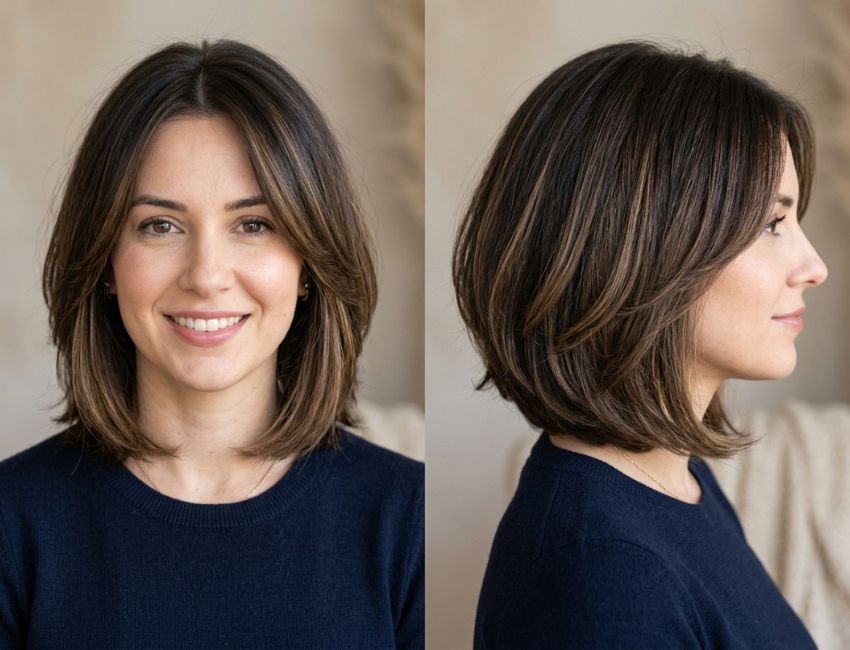
A layered bob for fine hair can make a difference because it combines a shorter overall length with strategic movement.
When hair becomes very long, its weight can pull the roots down and make the ends look stringy. Shortening the length can remove some of that weight. Then, carefully placed layers can create movement without making the ends appear too thin.
The key word is strategic. Fine hair usually does not need layers everywhere. Instead, a stylist can keep enough weight around the perimeter while adding subtle layers through selected areas.
This creates a fuller-looking outline while still allowing the haircut to move naturally.
What If Your Fine Hair Has Very Thin Ends?
If your ends look especially thin, avoid asking for lots of choppy layers. Although heavily layered hair can look voluminous in photographs, removing too much from fine ends may produce the opposite result in everyday life.
Ask your stylist to preserve the perimeter and add only subtle internal movement.
A slightly blunt or softly graduated bottom can make the ends look stronger. Then, a few carefully placed layers can prevent the haircut from looking too heavy.
What If Your Hair Is Fine but You Have a Lot of It?
Having fine strands does not necessarily mean having low hair density. You may have many fine strands and still have relatively thick-looking hair overall.
In this situation, your stylist may have more flexibility with layering. However, the haircut should still be customized according to how your hair behaves after washing and styling.
If your hair looks full when dry but becomes flat at the roots, the main problem may be root volume rather than a lack of hair.
Best Layered Bob for Fine Hair Based on Your Problem

There is no single bob that works for every woman. Your ideal version depends on what you want to fix.
Layered Bob for Fine Hair That Looks Flat at the Roots
If your main problem is flat roots, consider a bob that sits around the chin or slightly below it. This length can remove some weight while keeping enough hair to create a polished shape.
Ask for subtle crown layers rather than aggressive layering. During styling, use a lightweight root-lifting mousse and blow-dry the roots upward.
A side part can also help create visual lift. If you normally part your hair in the center, moving the part slightly to one side can immediately change where the volume appears.
Layered Bob for Fine Hair With Thin-Looking Ends
If your ends look sparse, keeping a strong perimeter should be your priority.
A stylist can create a clean bottom line while adding minimal layers above it. This gives the haircut movement without sacrificing the appearance of density.
Avoid excessive razor cutting or aggressive thinning if your ends are already delicate. Instead, discuss techniques that preserve weight at the bottom.
Layered Bob for Fine Hair That Gets Oily Quickly
Fine hair can sometimes become visibly oily because the strands separate easily. When this happens, the hair may appear flatter even when you have plenty of it.
A shorter bob can make washing and styling easier. You can also concentrate shampoo on the scalp and avoid applying heavy conditioner near the roots.
For styling, choose lightweight volumizing products. Dry shampoo can also be useful between washes, but it should not replace regular scalp cleansing.
Layered Bob for Fine Hair That Is Naturally Wavy
Fine wavy hair can look beautiful with soft layers because natural movement adds dimension.
Instead of creating lots of short layers, ask for blended layers that follow your natural wave pattern. This can help prevent the haircut from becoming bulky in some areas and flat in others.
Use lightweight curl-enhancing products and allow the hair to dry naturally when possible. A diffuser on a low setting can also help define waves while minimizing excessive manipulation.
Which Bob Length Is Best for Fine Hair?

The right length depends on your hair density, texture, face shape, and styling habits.
Chin-Length Bob
A chin-length bob creates a strong visual shape and can make fine ends appear more substantial. It is also relatively easy to style.
This length is particularly useful if your long hair feels heavy or your ends look increasingly thin.
Jaw-Length Bob
A jaw-length bob can create a clean, modern silhouette. Soft layers around the front can add movement without taking too much weight away from the bottom.
If you want a polished hairstyle for work, this length can be especially practical.
Shoulder-Length Bob
If you do not want to lose much length, a shoulder-length bob can provide a compromise. However, additional length means additional weight, so layering and styling become more important.
Ask your stylist to avoid making the ends overly wispy.
Should You Choose Layers or a Blunt Bob for Fine Hair?
This is one of the most important questions women with fine hair ask.
The answer depends on what your hair needs.
A blunt bob can make the perimeter appear denser because the ends sit at a consistent length. On the other hand, a completely blunt cut may feel too heavy or lack movement.
A layered bob introduces movement and dimension, but excessive layering can reduce the appearance of density.
For many women, the solution is somewhere between the two: a defined perimeter with subtle layers.
This combination gives you structure at the bottom and movement through the haircut.
Layered Bob for Fine Hair With Bangs: Is It a Good Idea?

Bangs can completely change the appearance of a bob, but they should be chosen carefully when your hair is fine.
Layered Bob for Fine Hair With Curtain Bangs
Curtain bangs can create soft face-framing movement. They are usually longer toward the sides and shorter near the center, allowing them to blend into the haircut.
However, avoid taking an unnecessarily large section of hair from the crown to create thick bangs. Doing so can make the remaining hair appear less dense.
Layered Bob for Fine Hair With Side-Swept Bangs
Side-swept bangs are another practical option. They can add softness around the face while requiring less density than a heavy straight fringe.
They are also easy to move aside when you want a different look.
How to Style a Layered Bob for Fine Hair Without Making It Flat
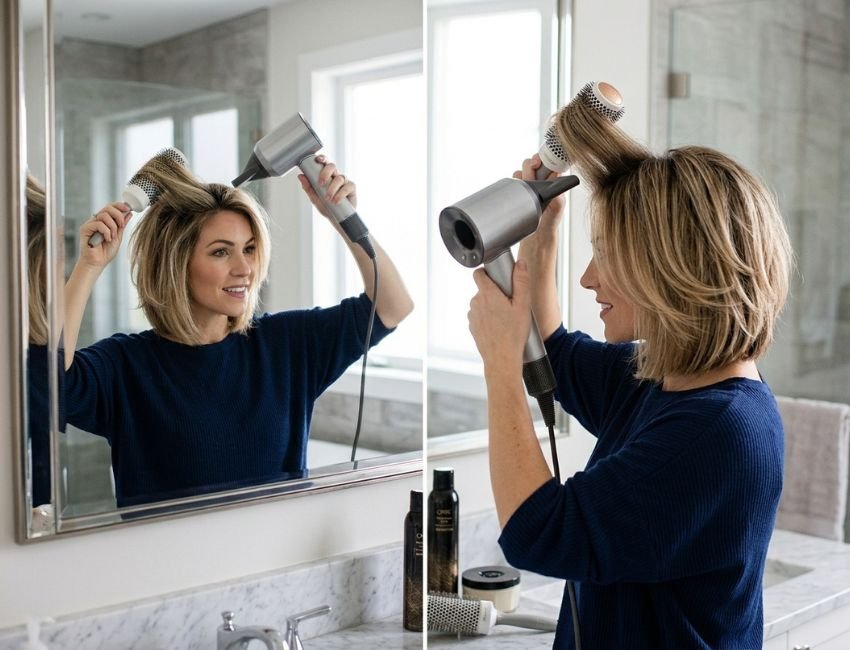
Even a good haircut can look flat if the styling routine is too heavy.
Start by washing the scalp thoroughly and applying conditioner mainly through the mid-lengths and ends. After towel-drying gently, apply a small amount of lightweight volumizing mousse.
Next, blow-dry the roots while lifting them with your fingers or a round brush. Concentrate on the crown because this is often where flatness is most noticeable.
Once the hair is dry, create loose waves if you want additional texture. Avoid making every section perfectly curled. Slightly uneven waves usually create a more natural appearance.
Finally, use a small amount of lightweight texture spray. Start with less product and add more only if necessary.
What Products Should You Avoid?
If your hair becomes flat easily, be careful with heavy oils, thick creams, waxes, and excessive leave-in products.
These products are not automatically bad, but they may be too heavy for your particular hair.
Instead, look for lightweight formulas designed for volume, texture, or fine hair. Product choice should always depend on how your hair responds rather than simply following a trend.
Common Layered Bob Mistakes That Make Fine Hair Look Thinner
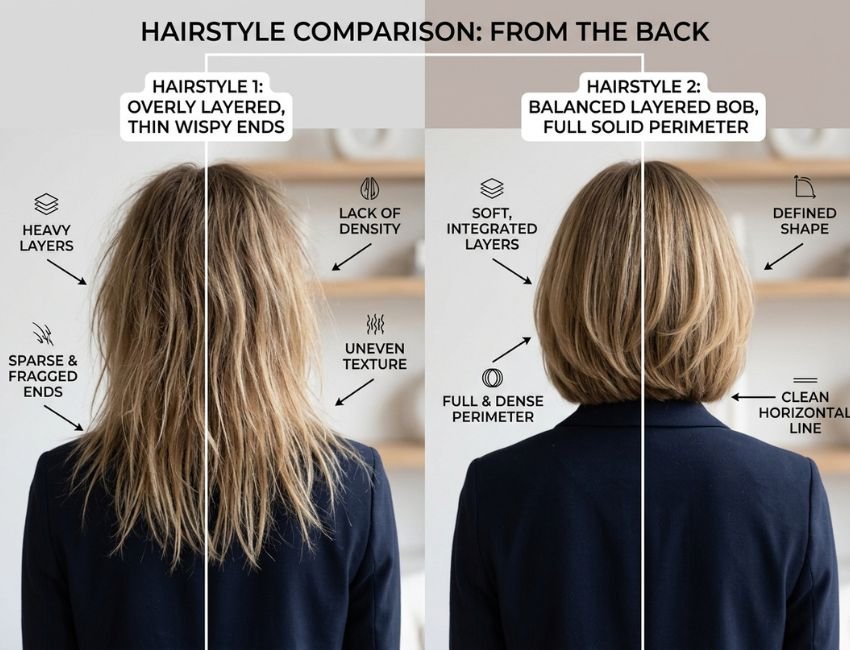
Choosing the right haircut is only half the solution. Certain mistakes can make fine hair appear even less dense.
Too many layers: Excessive layers can remove too much weight from the ends.
Over-thinning: Aggressive thinning can make already-fine ends look sparse.
Very long length: Extra weight may pull the roots down and reduce volume.
Heavy products: Too much product can coat fine strands and make them separate.
Over-styling: Repeated high heat can leave the ends dry and fragile.
Copying someone else’s haircut exactly: A hairstyle that works for thick hair may not work the same way on fine hair.
Instead of asking for an exact copy, show your stylist what you like about the reference photo and explain your hair concerns.
What Should You Tell Your Hairstylist?
Knowing what to say at the salon can make the haircut process much easier.
Instead of simply saying, “I want layers,” explain the problem you want to solve.
You can say:
“I have fine hair and I want movement, but I don’t want my ends to look thinner. Please keep enough weight around the perimeter and add subtle layers for volume.”
You can also show two or three reference photos. Choose pictures that have a similar hair texture and density to yours.
Tell your stylist how you normally wear your hair. If you rarely use a curling iron, choose a haircut that looks good without requiring daily heat styling.
This conversation can help your stylist create a haircut that is realistic for your lifestyle.
How to Maintain a Layered Bob for Fine Hair
A bob usually needs regular maintenance to keep its shape. As the hair grows, the carefully designed layers and perimeter can lose their original structure.
Trim frequency depends on how quickly your hair grows and how precise you want the shape to remain.
At home, handle fine hair gently. Avoid aggressive brushing, especially when the hair is wet. Use a wide-tooth comb or suitable detangling brush and work carefully from the ends upward.
Also, protect the hair from excessive heat. If you regularly blow-dry, straighten, or curl your bob, use heat protection and avoid unnecessarily high temperatures.
Healthy-looking ends can make a major difference to the overall appearance of fine hair.
Is a Layered Bob Suitable for Women Over 50?

Yes. A layered bob can be adapted to different ages, face shapes, and personal styles.
For women over 50, the most important consideration is not choosing a haircut simply because it is labeled as an “older woman’s hairstyle.” Instead, consider hair texture, density, maintenance preferences, and the amount of styling you enjoy.
A softly layered bob can look sophisticated with natural gray hair, highlighted hair, or a single color. Face-framing layers can also be adjusted according to the features you want to emphasize.
The goal is a haircut that makes you feel comfortable and works with your natural hair rather than requiring constant correction.
When Should You Avoid Heavy Layers?
Heavy layers may not be ideal if your ends are already extremely thin, damaged, or sparse.
If your main concern is making the hair appear denser, preserving weight may be more useful than removing it.
In that situation, a softly layered bob or a mostly one-length bob with minimal internal movement may provide a better starting point.
Your stylist can determine how much layering your hair can handle after looking at its actual density and texture.
FAQs About Layered Bob for Fine Hair
Is a layered bob good for fine hair?
Yes, a carefully designed layered bob can add movement while preserving enough weight to make fine hair appear fuller.
What is the best length for a layered bob for fine hair?
Chin-length to shoulder-length styles can work well, but the ideal length depends on your hair density, texture, face shape, and styling routine.
Can layers make fine hair look thicker?
Strategic layers can create movement and dimension, while a strong perimeter can help the ends look denser.
Should fine hair have lots of layers?
Usually, fine hair benefits from controlled layering because excessive layers can make the ends look thinner.
How do I add volume to a layered bob for fine hair?
Use lightweight volumizing products, lift the roots while blow-drying, and add soft waves or texture without weighing the strands down.
Conclusion
A layered bob for fine hair can solve several common hairstyle problems when it is customized correctly. If your hair looks flat, your ends appear thin, or long lengths feel heavy, a carefully structured bob can provide a more manageable shape and create the appearance of greater fullness. The most important step is avoiding excessive layering and preserving enough weight around the ends. From a chin-length bob to a shoulder-length version with soft bangs, there are many ways to adapt the style to your hair texture, face shape, age, and lifestyle. With the right cut, lightweight products, gentle styling, and regular maintenance, fine hair can look polished, dimensional, and naturally fuller without requiring complicated daily routines.